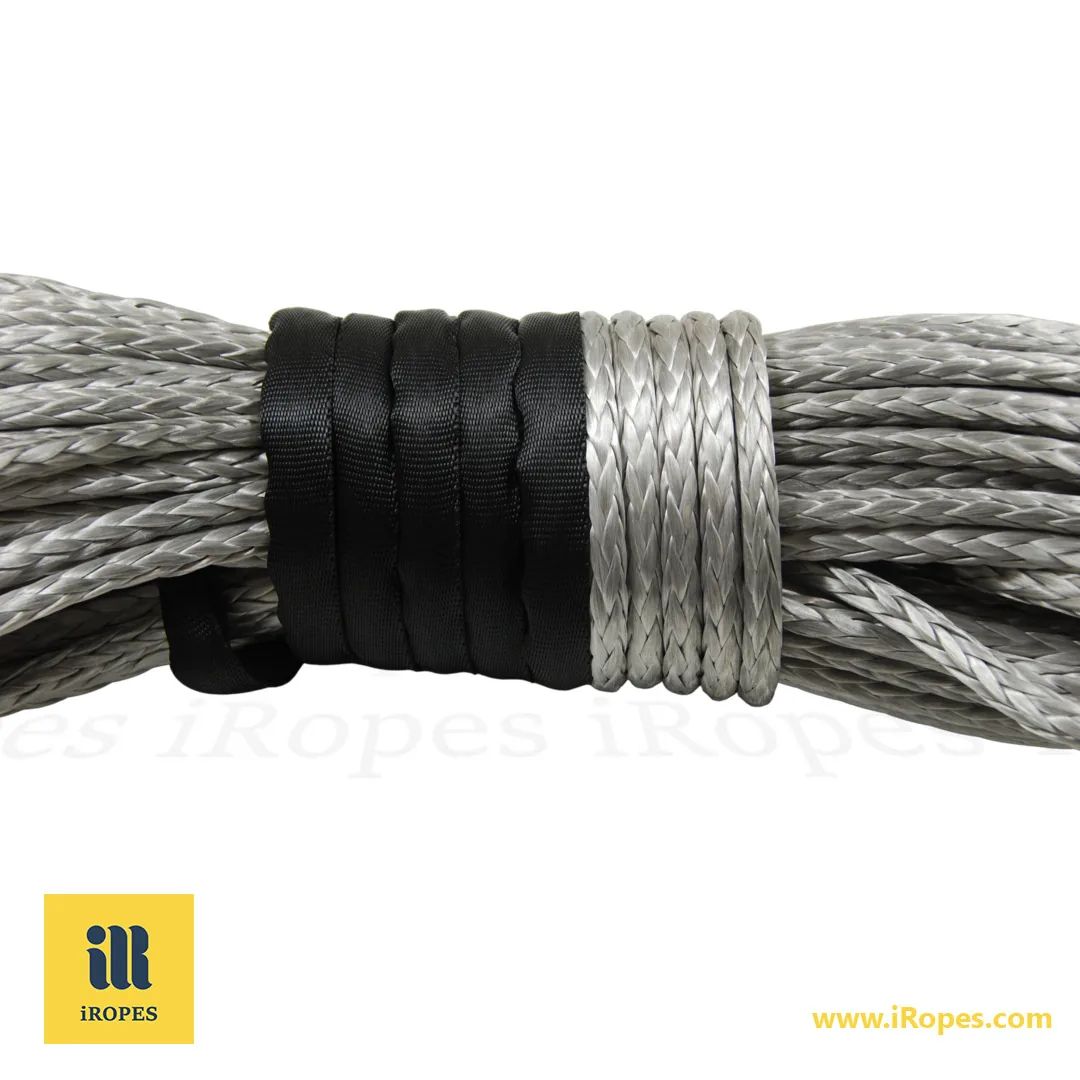
iRopes delivers premium black‑bungee or white‑polypropylene rope from a 15‑year‑old, ISO‑9001‑certified factory with 2,348 SKUs, 7‑10 business‑day lead times and a 10 % bulk discount from 5,000 ft. ⚡
≈ 7‑minute read – what you’ll gain
- ✓ Custom OEM/ODM designs in any colour or branding, built to your exact specs.
- ✓ ISO‑9001 quality assurance with third‑party tensile‑test reports available on request.
- ✓ Competitive, transparent pricing with bulk discounts — 10 % off orders ≥ 5 000 ft and 15 % off ≥ 20 000 ft.
- ✓ Worldwide pallet shipping with punctual delivery and full IP protection.
Most people assume the lowest‑price rope will keep a project on budget, but the hidden cost of breakage and delayed shipments can double your expenses. What if you could secure ISO‑9001‑certified rope, custom‑branded with standard 7‑10 business‑day lead times, while saving 10–15 % on bulk orders? In the sections below we’ll show how iRopes — a trusted name among rope vendors — helps you choose the right product and protect both your timeline and bottom line.
Understanding Rope Vendors and Their Services
Having explored why rope selection matters, the next step is to understand who actually provides those specialised products. A rope vendor supplies, custom‑manufactures, and ships rope products, offering OEM/ODM design, bulk pricing, IP protection, and logistics support. By partnering with a reliable vendor, you reduce the risk of unexpected failures and keep projects on schedule.
What does a rope vendor do? In plain terms, the vendor acts as the bridge between raw material manufacturers and your final application, handling everything from sourcing quality fibres to final delivery. This end‑to‑end service lets you focus on design and deployment rather than production headaches.
When you compare options, look for certifications that guarantee consistent quality. Key certifications to look for include ISO‑9001, ASTM D2256 test reports, and any industry‑specific approvals such as CE for European markets. These credentials signal that the vendor follows recognised quality‑management practices and conducts rigorous tensile testing.

Beyond certifications, the core responsibilities of a reputable rope vendor fall into three main categories.
- Sourcing quality raw materials – ensures consistent strength and durability across each batch.
- OEM/ODM design and production – creates custom rope specifications, colours, and branding to match your project needs.
- Logistics and bulk shipping – delivers pallets worldwide, with options for non‑branded or customer‑branded packaging.
Understanding the differences between supply models can also guide your decision. A wholesale rope supplier typically stocks a broad catalogue and offers volume discounts, while a retail outlet focuses on smaller orders and quicker turnaround. Direct‑to‑manufacturer arrangements, like those offered by iRopes, combine the advantages of bulk pricing with the flexibility of custom design, often shortening lead times because the product is built to your exact specifications.
For projects that demand specialised performance—such as using black bungee rope for high‑stretch tie‑downs or white polypropylene rope for floating marine applications—a vendor that provides material expertise is invaluable. They can recommend the optimal construction, advise on UV‑treated coatings, and even incorporate reflective elements for safety‑critical environments.
When selecting a rope vendor, always verify ISO‑9001 certification and request third‑party tensile‑test reports; it prevents unexpected failure on site. — John Miller, OSHA‑certified Safety Officer (2020)
By confirming that a vendor meets these service criteria and holds the right certifications, you lay a solid foundation for choosing the appropriate rope—whether you need the elasticity of black bungee rope for camping rigs or the buoyancy of white polypropylene rope for offshore fender systems. The next section will dive into the specifics of black bungee rope, examining its performance characteristics and typical applications.
Black Bungee Rope: Specs, Benefits, and Applications
If you need a cord that can absorb shock without snapping, black bungee rope is the go‑to choice. Its elastic core stretches roughly 100 % of the original length, giving you a smooth give that protects delicate loads while still delivering a reliable hold.

Material composition and core performance
The cord consists of a rubber‑based elastic core encased in a UV‑treated polypropylene jacket. This combination gives the rope a tensile strength of about 2 500 N (≈ 560 lb) for a 3/16 in (4.8 mm) diameter strand. The rubber core returns to its original length after each stretch, which is why it feels “springy” rather than “plastic”.
Size and diameter chart with load‑capacity recommendations
Choosing the right thickness means matching the working load limit (WLL) to your project. As a rule of thumb, WLL ≈ breaking strength ÷ 5. Select a cord whose rated breaking strength is at least five times your required WLL. The table below shows common diameters and typical breaking loads.
| Diameter (in) | Breaking Strength (N) | Recommended WLL (lb) |
|---|---|---|
| 1/8 | ≈ 1 200 | ≈ 54 |
| 3/16 | ≈ 2 500 | ≈ 112 |
| 1/4 | ≈ 3 800 | ≈ 171 |
| 3/8 | ≈ 6 200 | ≈ 279 |
Top use cases
Because it stretches without breaking, black bungee rope shines in situations where sudden forces occur. Outdoor campers use it to tension tarps, create makeshift clotheslines, or secure gear to a vehicle. Boaters rely on it for quick tie‑downs that need to absorb wave motion, and industrial sites appreciate its shock‑absorbing properties for securing equipment during transport.
Pros and cons compared with polyester and nylon cords
- High stretch (~100 %) — far greater than typical polyester or nylon cords.
- UV‑treated outer sheath — resists sun fading better than untreated cords.
- Lightweight with adequate strength for dynamic tie‑downs.
On the downside, the elastic core can lose a small amount of elasticity after repeated extreme loads, and the rope is not as abrasion‑resistant as a hardened polyester braid. If you need a cord that stays rigid under constant tension, a polyester or nylon rope may be a better fit.
Sizing Quick‑Guide
Start with the working load limit (WLL) you must support, multiply by 5 for a safety factor, then select the smallest diameter whose rated breaking strength meets or exceeds that figure. For a 100 lb WLL, a 3/16 in bungee (~560 lb break) meets the requirement.
So, is black bungee rope suitable for outdoor camping? Absolutely – its UV‑treated jacket endures sun exposure, and the high‑stretch core lets you secure shelters quickly without over‑tightening. Whether you’re rigging a tarp on a windy summit or fastening a kayak to a trailer, the rope’s elasticity and strength give you confidence that the load will stay in place.
With the specifications, sizing rules, and practical scenarios fresh in mind, you can now compare black bungee rope against alternatives and decide which material aligns best with your project’s demands. The next step will explore the lightweight, floatable counterpart: white polypropylene rope.
White Polypropylene Rope: Characteristics and Uses
After examining the elastic power of black bungee rope, it’s time to look at the lightweight, buoyant alternative that many marine and outdoor projects rely on: white polypropylene rope. This material’s unique chemistry makes it especially suited for environments where water, chemicals, and sunlight are constant companions.
White polypropylene rope offers excellent chemical resistance, meaning acids, bases and salty sea water won’t degrade its fibres. For more on the polypropylene rope benefits for outdoor construction, see our detailed guide. UV‑stabilised polypropylene retains strength during extended sun exposure; properly treated ropes resist degradation for at least 300 hours and retain more than 90 % of original strength. Because its density is around 0.91 g/cc, the rope naturally floats – ideal for floating fenders or safety lines on boats.

Standard constructions and diameter‑to‑strength ratios
The rope is most often supplied in three‑strand twisted or braided constructions. A 12 mm (½ in) strand typically delivers a breaking strength of roughly 2 500 N (≈ 560 lb), while a 10 mm (⅜ in) version handles about 1 700 N. To estimate the safe diameter for your project, divide the rope’s rated breaking strength by a safety factor of 5 to determine the WLL, then match that to your requirement.
Common applications
Because it resists corrosion and stays afloat, white polypropylene rope is a go‑to choice for marine fenders, dock‑side lines, and floating safety barriers. Gardeners favour it for tying plant supports, as the rope won’t rot when left outdoors. Event organisers also use it for temporary crowd‑control barriers where quick‑release and visibility matter.
Advantages over nylon and UHMWPE, plus any limitations
Compared with nylon, this rope is lighter, more cost‑effective and floats, while still offering respectable tensile strength. Against UHMWPE, it sacrifices ultimate strength but gains superior chemical resistance and easier handling. The trade‑off is lower abrasion resistance, so you should shield the rope from sharp edges in high‑wear spots.
Key Properties
What makes PP rope stand out
Chemical resistance
Resists acids, bases and seawater, so the rope stays strong even in harsh environments.
UV stability
Treatments help retain colour and strength for over 300 hours of sun exposure.
Floatation
Density below water means the rope naturally floats, ideal for marine safety lines.
Performance Benefits
Why choose it over alternatives
Lightweight
Low density reduces shipping weight and handling effort.
Cost‑effective
Manufacturing cost is lower than nylon or aramid, delivering savings on large projects.
Easy to splice
Splices and common knots can be made quickly with standard constructions.
While white polypropylene rope excels in buoyancy and chemical resistance, it has lower abrasion resistance than polyester, so protect it from sharp edges in high‑wear applications.
Understanding these characteristics helps you decide whether white polypropylene rope fits your project’s demands. The next logical step is to evaluate rope vendors – looking at ISO‑9001 certification, MOQ, lead times and IP protection – so you can place a custom order with confidence.
How to Choose the Right Rope Vendor and Order Custom Ropes
After learning which rope types suit your project, the next step is to vet the supplier that will deliver them. Picking a reliable rope vendor reduces surprise costs, shortens lead times, and safeguards the performance of both black bungee rope and white polypropylene rope.

Start with a quick checklist. It keeps the conversation focused and ensures you don’t overlook any deal‑breaker.
ISO‑9001
Confirms a systematic quality‑management process and reliable tensile‑test reporting.
IP Protection
Guarantees your proprietary design or branding stays secure throughout production.
Global Shipping
Direct pallet delivery to ports or warehouses worldwide, with optional non‑branded packaging.
15‑Year Track‑Record
2,348 rope SKUs and a proven export history give you confidence in scale and consistency.
For a complete view of our available rope families, visit the iRopes rope shop.
When you contact a potential supplier, ask these five questions to uncover hidden risks:
- Can you provide third‑party tensile‑test reports for the exact diameter I need?
- What is the standard lead time for a custom‑coloured order?
- Do you offer a warranty that covers premature breakage under normal use?
- How flexible are you with branding options such as loops, thimbles or printed logos?
- What bulk‑discount tiers apply once I exceed 5 000 ft?
Most vendors answer the lead‑time question with “7‑10 business days for standard specs; an extra 5‑10 days for colour or logo work.” That timeline lets you plan project milestones without surprise delays.
Bulk discounts start at 5 000 ft
Save 10 % on orders of 5 000 ft + and 15 % on 20 000 ft + for both black bungee rope and white polypropylene rope.
iRopes blends all these advantages into a single partnership. Their OEM/ODM capability means you can request a unique colourway for a black bungee rope tie‑down or a reflective white polypropylene rope for marine safety lines. With flexible minimum order quantities (MOQ), you avoid unnecessary inventory while still enjoying volume pricing.
Pricing is transparent and depends on diameter, construction, and accessories. You’ll receive a clear quotation, and bulk‑discount schedules of 10 % for ≥ 5 000 ft and 15 % for ≥ 20 000 ft apply to both rope types.
Armed with the checklist, the right questions, and a clear view of iRopes’ competitive edge, you’re ready to request a custom quote. The next part of the guide will recap why reliable rope vendors matter and invite you to take the next step for your own project.
With the guide complete, you now understand why selecting the right rope vendors is crucial, how black bungee rope provides high‑stretch shock absorption for camping and marine tie‑downs, and why white polypropylene rope excels in buoyant, chemical‑resistant applications. Backed by 15 years of experience in China, iRopes offers 2 348 cordages for marine, racing sports, industrial, and safety uses — crafted from UHMWPE, Technora™, Kevlar™, Vectran™, polyamide and polyester — all under ISO‑9001 control and ready for OEM/ODM customisation to match your branding, load‑capacity and delivery needs.
Request your custom rope solution
If you’d like a detailed quote, colour options or specific performance data, simply complete the form above – our specialists will turn these insights into a rope solution perfectly suited to your project.