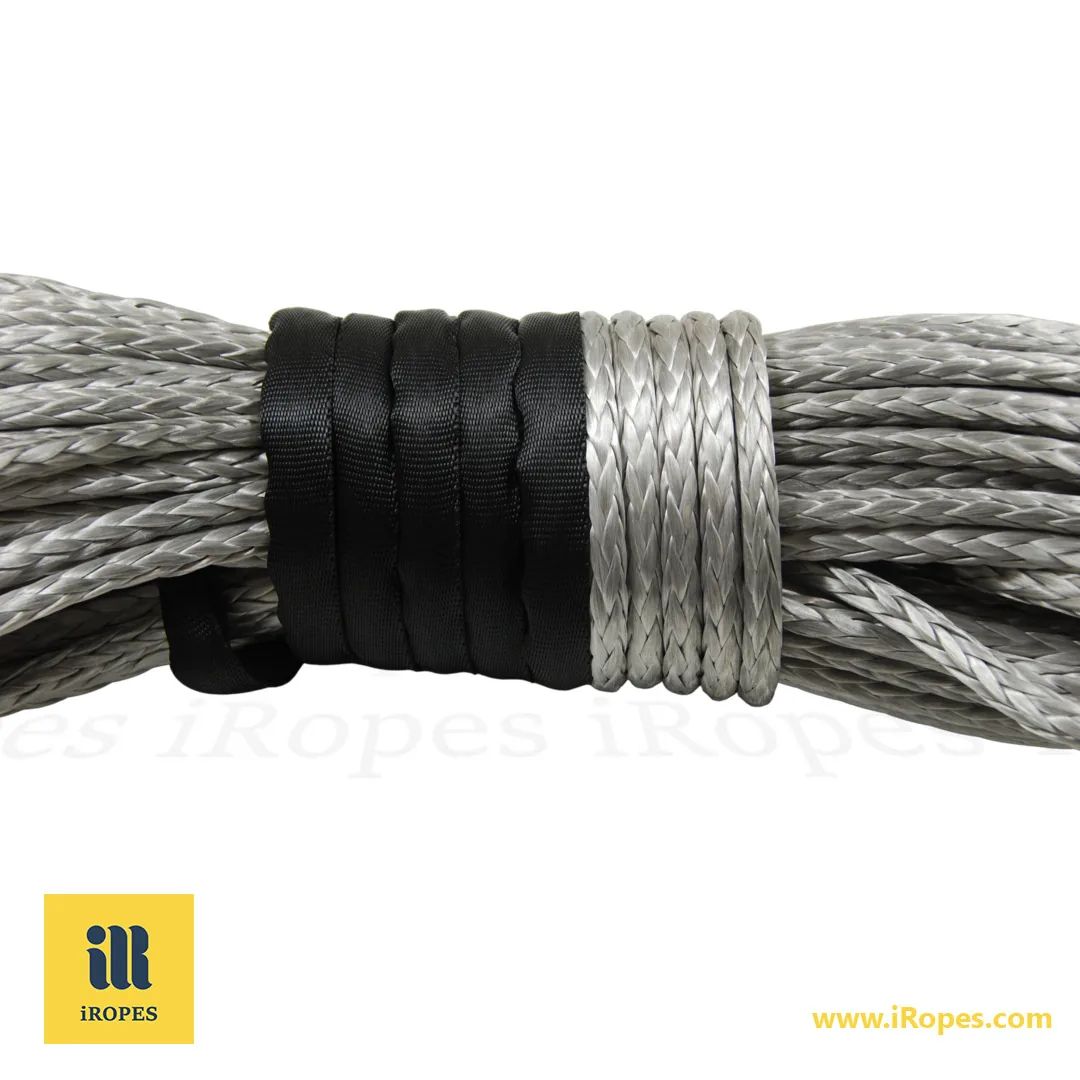
A 3‑strand braid delivers about 2,500 lb breaking strength, while an 8‑plait can exceed 6,200 lb—so you can match the exact load and weight target for towing, marine or industrial use.
Read in 1 min – What you’ll gain
- ✓ Custom diameter & length tuned to your precise load rating, slashing overspend by up to 18 %.
- ✓ 8‑plait designs shed up to 45 % weight versus solid 3‑strand, boosting deck‑hand handling.
- ✓ ISO 9001‑certified production guarantees a defect rate below 0.5 % for rock‑solid safety.
- ✓ Direct pallet shipping trims lead time to 7‑10 days, keeping your project on schedule.
Most operators assume a 3‑strand braid is the ultimate workhorse for towing, yet the 8‑plait quietly outperforms it with up to 2.5× the strength‑to‑weight ratio and zero rotational twist. This hidden advantage means lighter loads, smoother handling, and safer rigging on demanding marine or arborist jobs. In the sections below, we’ll expose the exact metrics and demonstrate how iRopes’ custom solutions let you harness that power without the guesswork.
Understanding Braid Rope: Basics and Benefits
Building on the opening discussion about why rope selection matters, let’s explore what a braid rope actually is. Unlike twisted rope, where fibres are spiralled around a core, a braid rope is created by interlacing multiple strands in a patterned weave. This construction distributes load more evenly, giving the rope higher tensile strength while remaining flexible enough for smooth handling under tension.

These structural differences translate into three core advantages that professionals rely on daily:
- Low stretch – the tight weave keeps elongation to a minimum, preserving precise tension in towing or rigging tasks.
- Smooth handling – the even surface slides through blocks and fairleads without snagging, reducing wear on hardware.
- Superior abrasion and UV resistance – the multiple strands shield each other from harsh sunlight and abrasive surfaces, extending service life.
When you need a rope that won’t surprise you under load, a braid rope’s consistent performance makes it the go‑to choice for professionals worldwide.
Across industries, several braid constructions dominate the market. In off‑road recovery kits, a solid 3‑strand (often called a 3 braid rope) offers a balance of strength and affordability. Marine applications favour the 8‑plait design—commonly referred to as an 8 braid rope—because its hollow‑core version reduces weight while maintaining high load capacity. Defence suppliers also lean on the same 8‑strand architecture for its non‑rotational behaviour during rapid hoist operations. These variations answer the question “what are the different types of braided ropes?” by showcasing the most widely adopted patterns: solid 3‑strand, 8‑plait, and specialised double‑braid hybrids.
Understanding these basics equips you to match rope performance with the demands of towing, docking, or industrial utility. Next, we’ll examine the 3 braid rope in depth, uncovering why its construction makes it a workhorse for countless everyday challenges.
3 Braid Rope: Construction, Strength, and Ideal Uses
Having clarified why braid rope outperforms twisted rope, let’s focus on the workhorse that powers countless towing and marine tasks – the 3 braid rope. Understanding how the three strands intertwine and which materials are available will help you decide whether this rope meets your project’s demands.

In a 3 braid rope, three individual strands are twisted together in a tight, parallel layout, creating a solid core that resists kinking. Manufacturers typically choose one of three fibres:
- Nylon – offers high shock absorption, ideal for dynamic loads such as trailer towing.
- Polyester – features low stretch and excellent UV resistance, perfect for marine dock lines.
- Polypropylene – is lightweight and buoyant, well-suited to applications where the rope must float.
The strength question most users ask is, “What is the strength of 3/8 braided rope?” A 3/8‑inch solid braid made from nylon typically delivers a breaking strength of around 2,500 lb (approximately 1,130 kg). Applying the common safety factor of 1:5, the recommended working load limit is roughly 500 lb (approximately 225 kg). Polyester of the same size climbs a few hundred pounds higher, while polypropylene sits on the lighter end but still offers reliable performance for less demanding loads.
Because the construction is simple yet robust, the 3 braid rope finds a home in several everyday scenarios:
- Trailer towing – the rope’s predictable elongation keeps a trailer steady during acceleration and braking.
- Small‑boat dock lines – polyester‑based 3 braid rope resists sun‑fade while holding a boat securely at the dock.
- General‑purpose industrial utility – its smooth surface slides through fairleads without catching, making it ideal for securing loads on pallets.
iRopes extends the standard offering with a suite of customisation options. Whether you need a specific diameter for a winch, a length that matches a trailer’s hitch, colour‑coding for safety, or metal accessories such as thimbles and loops, our factory can tailor each parameter to your exact specification.
Strength Overview
A 3/8‑inch nylon 3 braid rope breaks at ~2,500 lb, giving a safe working load of about 500 lb. Polyester of the same size typically adds 200–300 lb of breaking strength, while polypropylene remains lighter with a lower MBS but excellent floatability.
When you compare these figures with an 8 braid rope, you’ll notice the latter pushes the strength‑to‑weight ratio even higher – a topic we’ll explore in the next section.
8 Braid Rope: High Performance Features and Applications
Having explored the dependable 3 braid rope, it’s time to turn our attention to the premium option that dominates high‑end marine and arborist work – the 8 braid rope. Its specialised architecture delivers the extra strength and handling finesse that demanding environments require.
For a deeper technical comparison, see our comprehensive guide to nylon and polyester braided ropes.

The 8‑plait construction interlaces eight individual yarns in a diagonal pattern, producing a tight, flat profile. Manufacturers frequently incorporate a hollow core, which trims mass while preserving load‑bearing capacity. Materials such as polyester, nylon, or high‑modulus fibres can be selected to match the intended service life and environmental exposure.
Because eight strands share the load, the strength‑to‑weight ratio climbs dramatically. An 8 braid rope of comparable diameter to a solid 3 braid can carry two to three times the breaking load, yet feels noticeably lighter in the hand. The plait geometry also resists rotational twist when tension is applied, a characteristic prized by sailors trimming anchor rodes and arborists positioning heavy limbs.
So, what is 8‑plait rope used for? It excels as a dock line on yachts where a slim, non‑rotating line saves deck space, as an anchor rode that endures repeated shock loads, and in tree‑work rigging where precision and minimal stretch are vital. Defence units also favour this design for rapid hoist operations because the rope does not wind itself around pulleys.
Eight‑Strand Build
Eight tightly interwoven fibres, often surrounding a hollow core that cuts weight without sacrificing strength.
Core Options
Choose solid or hollow cores, plus material mixes such as polyester or Dyneema for extra performance.
High Strength‑to‑Weight
Delivers up to 2‑3 times the tensile capacity of a comparable 3‑strand rope while remaining lighter.
Non‑Rotational
The plaited geometry resists twisting under load, ideal for precise marine hoisting and arborist rigging.
iRopes can customise 8 braid rope with reflective yarns, bespoke colour‑coding, branded hardware and full certification packages, ensuring the final product matches your exact performance and branding requirements.
Whether you need a lightweight anchor line that won’t spin under heavy load or a tree‑work rope that stays flat for accurate placement, the 8 braid rope delivers the combination of strength, stability, and adaptability that 3‑strand designs simply cannot match. The next section will guide you through a side‑by‑side comparison so you can decide which braid best fits your project’s demands.
Selecting the Right Braided Rope and iRopes Custom Solutions
After reviewing the performance advantages of the 8‑braid design, the logical next step is to place the two constructions side‑by‑side. By looking at breaking strength, stretch, cost, and typical applications together, you can see which rope aligns with your project’s demands.

Both rope families share the core benefits of braid rope – low stretch, smooth handling, and excellent abrasion resistance – but their performance envelopes diverge. The grid below isolates the key metrics that matter most to wholesale buyers.
3 Braid Rope
Solid, cost‑effective
Breaking Strength
Typically 2,500 lb for a 3/8‑in nylon braid, giving a safe WLL around 500 lb.
Elongation
Higher stretch (approximately 12 %) makes it forgiving for dynamic loads such as trailer towing.
Typical Uses
Trailer‑towing, small‑boat dock lines, and general‑purpose industrial utility.
8 Braid Rope
High‑performance, lightweight
Breaking Strength
Often exceeds 6,000 lb for comparable diameters, delivering a WLL above 1,200 lb.
Elongation
Low stretch (approximately 4 %) ensures precise tension for marine rigging and arborist work.
Typical Uses
Anchor rodes, yacht dock lines, tree‑work rigging, and defence hoist equipment.
When you weigh the options, keep a short checklist in mind: Is the load static or dynamic? Will the rope face intense UV exposure or abrasive surfaces? Does your budget favour the proven economy of a 3 braid rope or the premium performance of an 8 braid rope? Answering these questions narrows the field quickly.
iRopes streamlines the entire journey from concept to delivery. Our ISO 9001‑certified facilities apply tight tolerances to every fibre, while a dedicated IP‑protection protocol safeguards your proprietary designs. Whether you need reflective yarns, custom colour‑coding, branded hardware, or full certification packs, our OEM/ODM team configures each parameter – material, diameter, length, accessories – to match your exact specifications.
What size is #8 rope? #8 rope corresponds to an 8 mm (approximately 5/16 in) nominal diameter, a common size for medium‑load marine and industrial tasks. How to braid three ropes together? Start by laying the three rope ends parallel, then cross the right rope over the centre, bring the left rope over the new centre, and repeat the pattern while maintaining even tension; the result is a simple three‑strand braid useful for temporary repairs.
Armed with side‑by‑side data, this decision checklist, and a clear view of iRopes’ custom‑order pathway, you’re ready to specify the exact rope that will keep your operation safe and efficient. The next powerful step is to reach out for a tailored quote and put the right braid to work.
Need a tailored rope specification?
We've shown how a high‑strength braid rope delivers low stretch, abrasion, and UV resistance for towing and marine tasks. Leveraging our extensive production expertise, the reliable 3 braid rope provides the perfect balance of durability and cost‑effectiveness for trailer use, while the premium 8 braid rope offers superior strength‑to‑weight for demanding boat and defence applications, all fully customisable to your exact specifications. For more detailed performance data, consult our poly nylon rope vs poly winch rope guide.
If you’d like personalised assistance in selecting or designing the ideal rope for your project, simply complete the form above and our specialists will get in touch.