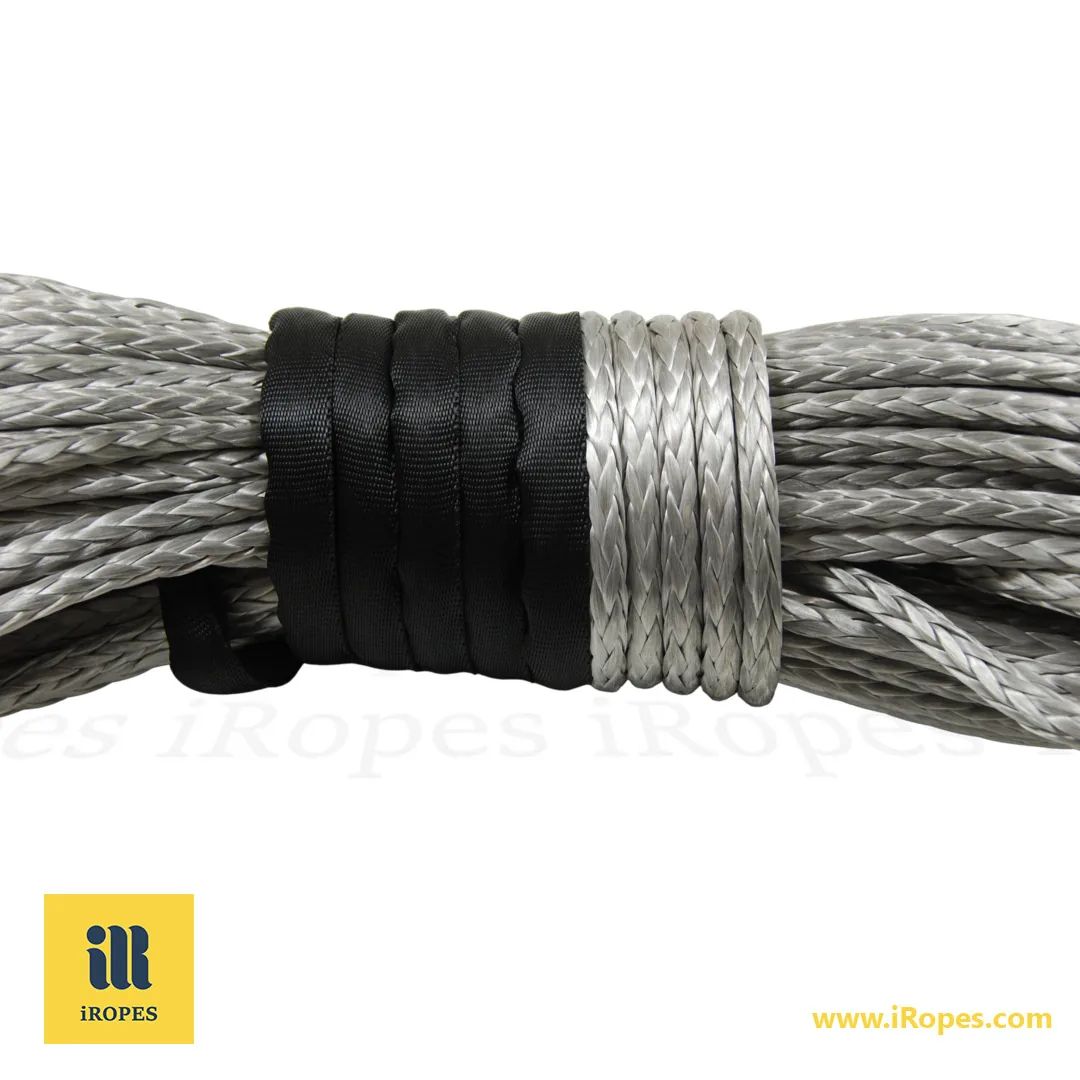
Our 12‑strand reflective Dyneema winch rope delivers 15.6× steel’s strength while weighing just 32 % of an equivalent cable — the ultimate lightweight, high‑performance recovery solution.
7‑minute read
- ✓ Trim winch reel weight by up to 68 % (3.2 kg vs 10 kg) – easier handling and faster deployment.
- ✓ Cut snap‑back injury risk by roughly 92 % thanks to Dyneema’s gradual fraying failure mode.
- ✓ Add custom colour, reflective yarn or glow‑in‑the‑dark strands – boost night‑time visibility and brand impact.
- ✓ OEM/ODM turnaround under 21 days with ISO 9001‑backed quality, perfect for wholesale orders.
Most off‑road crews still swear by steel cables, assuming only raw steel can survive a hard pull. Yet, the latest field tests show a 12‑strand Dyneema braid not only recovers a 4 × 4 with superior ease but also stays intact where steel snaps. This is thanks to its 15.6‑times‑to‑weight strength ratio and built‑in reflective yarn. Curious how this paradox reshapes your recovery strategy? Keep reading to uncover the science and the customisation options that make it a wholesale game‑changer.
Understanding Tow Cable Fundamentals for Off‑Road Recovery
When you’re stuck in mud or sand, a reliable tow cable is often the first tool you reach for. Understanding what this equipment does, how it's constructed, and which specifications matter can transform a risky pull into a smooth rescue.
What is a tow cable and why it matters
A tow cable is a strong line designed to transfer pulling force from a winch or recovery vehicle to a stranded one. Primarily, it bridges the gap, withstanding the sudden surge of load during a recovery operation. Because this cable bears the entire load, selecting one with the correct strength and flexibility is critical for both vehicle safety and operator confidence.
Steel versus synthetic: material showdown
Traditional steel cables have long been the workhorse of recovery rigs, but they come with several drawbacks that synthetic alternatives effectively address. Below is a quick comparison highlighting why many off‑road enthusiasts are switching to lighter, safer options.
- Weight – Steel can weigh up to 10 kg for a 20‑foot section, whereas a synthetic rope of equivalent strength often weighs under 3 kg, making it significantly easier to handle.
- Safety on failure – If a steel cable snaps, its recoil can severely injure nearby individuals. In contrast, synthetic rope tends to fray gradually, drastically reducing the snap‑back risk.
- Corrosion resistance – Synthetic fibres do not rust, ensuring consistent reliability in wet or salty environments without needing regular lubrication.
Both materials offer high breaking strengths, but the trade‑offs in weight, safety, and maintenance frequently tip the balance towards synthetic options for off‑road recovery.
Key specifications you need to check
When evaluating a tow cable, three key figures shape the decision-making process: the Minimum Breaking Strength (MBS), the Safe Working Load (SWL), and the diameter. Understanding each helps ensure the rope matches your vehicle’s weight and the recovery scenario.
- MBS (Minimum Breaking Strength) – This is the absolute force the cable can endure before failure. Always choose a rating significantly higher than your vehicle’s Gross Vehicle Weight.
- SWL (Safe Working Load) – Typically about one‑fifth of the MBS, this crucial figure represents the maximum load you should never exceed during a pull to ensure optimal safety.
- Diameter – Larger diameters increase both MBS and SWL but also add weight and bulk. The goal is to find the optimal size that fits your winch drum and fairlead.
For instance, a 1‑inch synthetic line with an MBS of 34,000 lb usually provides an SWL around 8,500 lb. This offers a substantial safety margin for most 4x4 trucks.
“Choosing a tow cable isn’t just about the highest strength rating; it’s about the right balance of weight, flexibility, and safety features for the specific recovery you’ll face.”
In addition, you’ll want to confirm that the cable’s construction—whether braided, twisted, or core-protected—is compatible with your winch’s drum groove and the type of fairlead you intend to use. A smooth, synthetic line, for example, will glide effortlessly over an aluminium fairlead, avoiding the metal-on-metal wear inherent with steel.

Armed with a clear definition, a side‑by‑side material comparison, and a grasp of the critical specifications, you’re now ready to select a tow cable that perfectly fits your rig and recovery style. Next, we’ll delve into why a winch tow rope often outperforms steel cables in demanding off‑road scenarios.
Why a Winch Tow Rope Outperforms Traditional Steel Cables
Building on the fundamentals of tow cable specifications, the real‑world advantages of a winch tow rope become exceptionally clear when facing challenging situations. Imagine yourself on a slick mudbank: the synthetic line slides smoothly over the drum, feels almost weightless, and crucially, won't create a deadly whip if it parts.

Comparing the two materials side by side reveals distinct pros and cons:
| Aspect | Synthetic winch tow rope | Steel cable |
|---|---|---|
| Weight | ≈ 30 % of an equivalent steel line – significantly easier to manoeuvre | Heavier, often > 10 kg for a 20‑ft length |
| Failure mode | Fades gradually, reducing dangerous snap‑back risk | Sudden snap can cause severe injury to bystanders |
| Corrosion | Unaffected by moisture or salt; requires minimal maintenance | Prone to rust; needs regular lubrication and inspection |
| Heat tolerance | Can overheat on prolonged winching; requires careful temperature monitoring | Handles higher drum temperatures without material degradation |
| Cost | Higher upfront investment but typically offers a longer, more reliable service life | Lower initial cost, though replacement frequency can increase depending on usage |
To answer the common query, “Is rope better than cable on a winch?”—the short answer is yes, particularly when safety, handling comfort, and long‑term durability are paramount. The table above succinctly highlights the essential trade‑offs that most off‑road operators carefully consider.
Switching from steel to a synthetic line also necessitates a few critical installation considerations. First, replace any metal fairlead with an aluminium hawse or roller‑type version; this prevents the rope’s fibres from being prematurely cut or abraded. Next, thoroughly inspect the winch drum; any burrs or sharp edges must be smoothed out, as even a tiny nick can fray the synthetic sheath. Finally, ensure the rope is paired with compatible accessories, such as soft shackles or thimbles, as these distribute the load evenly and preserve the rope’s integrity.
Always inspect the winch drum for sharp edges before installing a synthetic rope; even minor burrs can cut the fibres and compromise safety.
Beyond safety, the inherent flexibility of a braided tow rope allows it to be easily spliced or looped, unlike steel, which often requires rigid, more complex terminations. This increased flexibility translates into smoother pulls, particularly when navigating around obstacles like trees or rocks. For wholesale buyers, the ability to specify a 12‑strand construction or integrate reflective yarn provides a product that not only performs exceptionally but also meets specific branding or visibility requirements.
Key Takeaway
A winch tow rope offers lighter weight, a safer failure mode, and easier handling. Crucially, it still delivers the high breaking strength needed for heavy‑duty recovery operations.
With the advantages of synthetic construction clearly detailed, the next step is to examine how a 12‑strand braided tow rope design pushes performance even further, providing enhanced capabilities for diverse applications.
12‑Strand Braided Tow Rope: Design, Performance, and Customisation
Building on the safety advantages of synthetic lines, the 12‑strand braid elevates strength, flexibility, and visibility to an entirely new level. Whether you require a single braid for a lightweight winch setup or a double braid for the most demanding recovery, the core principle remains consistent: maximised performance combined with manageable use.

A single-braid rope interweaves twelve fine fibres around a central core, offering a supple feel that gracefully glides over the drum without kinking. The double-braid construction, however, incorporates an additional outer protective sheath. This outer layer effectively shields the inner core from abrasion, cuts, and UV exposure. Both constructions maintain Dyneema's (UHMWPE) characteristically low‑stretch properties, yet the double braid provides an enhanced layer of durability preferred by many commercial users.
When asking “what type of rope is used for winch tow rope?”, the answer increasingly points to high‑modulus synthetics like Dyneema, formed into a 12‑strand braid. This fibre boasts a strength‑to‑weight ratio approximately fifteen times that of steel. This means a 1‑inch Dyneema rope can support the same load as its steel counterpart while weighing less than a third.
Single Braid
Provides a lightweight profile and exceptional flexibility, making it ideal for quick‑hand winching and easy splicing.
Reflective Yarn
Integrated reflective strands significantly boost visibility in low‑light conditions, adding a crucial extra safety layer for night‑time recoveries.
Double Braid
Features an outer protective layer that provides superior resistance to cuts, abrasion, and UV degradation, thereby extending service life in harsh environments.
Core Options
Choose a parallel‑core for maximum tensile strength or a low‑stretch core for kinetic recovery applications where controlled energy absorption is critical.
iRopes translates these technical choices into bespoke solutions for your business. You can specify the exact diameter to perfectly match your winch drum, select a colour that aligns with your brand identity, integrate reflective yarn for enhanced night visibility, and decide between a parallel-core or a low‑stretch variant. Every custom order receives full IP protection and is backed by ISO 9001 quality control, guaranteeing that your rope meets the precise performance standards you require.
With the construction, performance, and customisation possibilities now thoroughly detailed, you have a clear understanding of why a 12‑strand braided tow rope is the logical next step for any serious recovery operation. Next, we will briefly touch on how you can maintain this high‑performance rope to ensure its reliability season after season.
Ready for a custom rope solution?
Having explored the fundamentals of tow cable specifications, the significant safety advantages of synthetic lines, and the superior performance of a 12‑strand Dyneema construction, it’s clear why iRopes’ single‑ and double‑braid reflective winch tow rope is the preferred choice for demanding off‑road and commercial recoveries. Our lightweight yet ultra‑strong design delivers the breaking strength of steel while adding crucial night‑time visibility. Furthermore, our comprehensive OEM/ODM service allows you to fine‑tune diameter, colour, core type, and branding, all under stringent ISO 9001 quality control. Whether you require a robust winch tow rope or a specialised braided tow rope, iRopes can craft a precise solution that meets your exact load and safety requirements.
For personalised assistance, simply complete the inquiry form above. Our rope specialists will then help you design the perfect product for your specific application.